Search This Blog

Friday, July 19, 2019

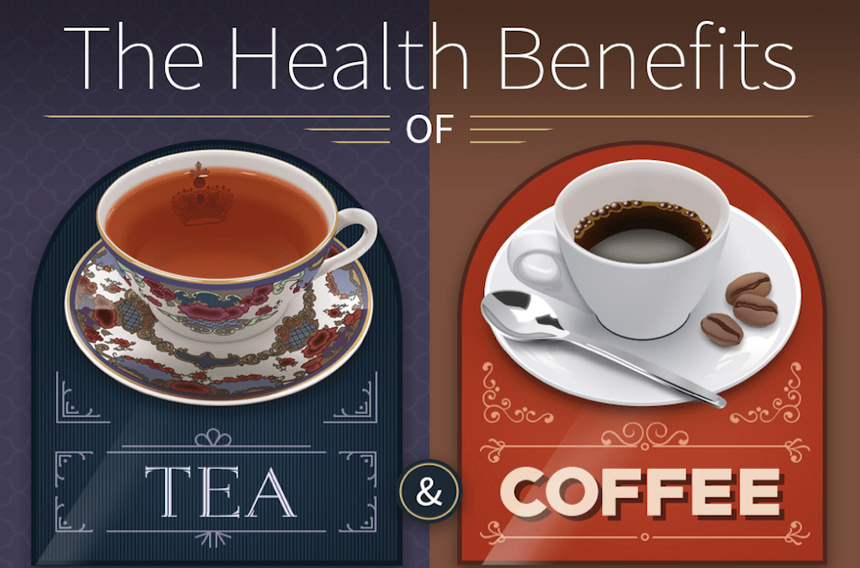
“The Health Benefits of Tea and Coffee”


Common Ground: Aside from plain water, coffee and tea are the most enjoyed beverages around the world. Both have things in them that may help your health, and they’re an excuse to get together with a friend -- that can be good for you, too.  

Coffee Basics: The beans grow on flowering trees found in more than 50 countries around the world, including the U.S. (Hawaii). They’re roasted and ground, then boiled, dripped, steamed, or soaked to make coffee, depending on where you live and how you like it.

Tea Basics: More than two-thirds of the world’s people drink this beverage, which is made from the leaf of a bush called Camellia sinensis. You typically steep the leaves in steaming hot water for a few minutes then serve the tea hot or over ice.

Green, Oolong, Black: What’s the Difference? Tea makers dry and crush the leaves to bring out their oils, then they might expose them to air for a while, depending on the kind of tea they want to make. This is called “fermentation” -- it’s a chemical reaction that affects the flavor of the leaves and turns them brown. The longer they’re exposed, the more caffeine they have. Green tea uses leaves that haven’t been fermented at all, which is why it has almost no caffeine. Oolong uses leaves that have been fermented for a time, while black tea leaves are fermented the longest.

Free Radicals: These chemicals can damage your cells and lead to disease and illness. Your body makes them when it turns certain foods into energy and when sunlight hits your skin. You also can get them from things you eat and drink. Tea and coffee help your body fight free radicals with chemicals of their own called antioxidants.

Type 2 Diabetes: Both tea and coffee are linked to a lower chance of getting this condition, which affects how your body uses blood sugar (glucose) for fuel. Coffee has lots of a certain antioxidant that helps keep your blood sugar lower and more stable -- the main challenge of diabetes. And antioxidants from tea may help your body process sugar in your blood.

Parkinson’s Disease: Coffee and tea may help against this serious disease, which attacks the nerve cells in your brain and makes it hard for you to move. Some studies suggest that caffeine can ease early symptoms of Parkinson’s, while others show that drinking coffee and tea might help protect your brain from it in the first place.

Heart Disease: Doctors once thought people with this should cut down on tea and coffee, because of the caffeine, but now it seems they may protect you from it. In one study, people who drank 3 to 5 cups of coffee a day were less likely to have a buildup of calcium in the vessels that bring blood to your heart muscle. That could mean a lower chance of heart disease.

Liver Disease: This is another organ that probably benefits from your morning cup of joe. Drinking 3 or more cups of coffee a day may lower your odds of having chronic liver disease, cirrhosis, and liver cancer -- and it may be an alternative medicine for people who have those issues. Coffee has more than 100 different chemical compounds in it, and scientists are trying to figure out what they do and how they might work together to help your liver.

Stroke: This happens when blood is cut off from a certain area of your brain, and a cup of coffee or tea a day might lower your chances of having one. This may be because coffee can ease inflammation and help control your blood sugar levels. And drinking black tea is linked to lower blood pressure, which can make you less likely to have a stroke. 

Cancer: Coffee and green tea might help prevent breast and prostate cancers, while all kinds of tea may protect you against the kinds of cancer that affect the ovaries and stomach. Researchers think antioxidants in tea, including ones called polyphenols, are to thank for this.

Alzheimer’s Disease: This disorder attacks your brain’s nerve cells (neurons) -- it can cause memory loss and changes in thought patterns and behavior. Coffee has antioxidants that may help protect neurons, and green tea has some that may help prevent the clusters of proteins believed to cause the disease.  

Gallstones: These are tiny pieces of hardened cholesterol and other substances that form in your gallbladder -- a small pear-shaped organ near your belly that helps with digestion. They can sometimes cause serious pain and health problems if they’re not treated. But coffee can lower your chances of getting them because it helps move fluid through your gallbladder and makes the cholesterol less likely to crystallize into gallstones.

Weight Loss: If you drink low-calorie beverages like coffee and tea instead of sugary ones, you may find it’s easier to lose weight. They can give you a satisfying pick-me-up with almost no calories. Of course, that doesn’t work if you add a bunch of sugar and cream -- so stick with the basic brew. 

Don’t Overdo It: Despite the health benefits of coffee and tea, too much caffeine can make you anxious or irritable and make it hard to sleep. It also can make you less able to hold onto calcium, which can lead to bone fractures (calcium keeps bones strong). Talk with your doctor if you have questions about how much is too much for you.

Reviewed by: Kathleen M. Zelman, MPH, RD, LD on February 26, 2019

Sources:

Alzheimers.net: “Benefits of Green Tea for Alzheimer’s.”
Alzheimer’s Foundation of America: “About Alzheimer’s Disease.”
Berkeley Wellness: “Types of Tea: Black, Green, Oolong, and Blends.”
Harvard School of Public Health: “Other Healthy Beverage Options,” “Ask the Expert: Coffee and health,” “What is it about coffee?”
Mayo Clinic: “Gallstones.”
National Coffee Association: “Coffee Around the World.”
National Institutes of Health: “Caffeine and adenosine,” “Coffee: A Selected Overview of Beneficial or Harmful Effects on the Cardiovascular System?” “Low Calorie Beverage Consumption Is Associated with Energy and Nutrient Intakes and Diet Quality in British Adults,” “No Association of Coffee Consumption with Gastric Ulcer, Duodenal Ulcer, Reflux Esophagitis, and Non-Erosive Reflux Disease: A Cross-Sectional Study of 8,013 Healthy Subjects in Japan,” “Coffee and tea: perks for health and longevity?” “Gallstones,” “Quercetin, not caffeine, is a major neuroprotective component in coffee,” “NIH study finds that coffee drinkers have lower risk of death,” “Tea consumption and risk of stroke: a dose-response meta-analysis of prospective studies,” “Coffee and acute ischemic stroke onset,” “Coffee consumption and mortality from all causes, cardiovascular disease, and cancer: a dose-response meta-analysis,” “Coffee and tea consumption and the risk of Parkinson's disease,” “Neuroprotective and anti-inflammatory properties of a coffee component in the MPTP model of Parkinson's disease,” “Does long-term coffee intake reduce type 2 diabetes mellitus risk?”
National Parkinson Foundation: “What's Hot in PD? Caffeine as a Potential Treatment for Parkinson’s Disease.”

Much Love, Dr.Shermaine, #InformativeRead #PleaseShare #HealthyBodySoulAndSpirit #IWantYou2LiveWell

The Goal is to Always Make You Aware of What Concerns Your Body, Soul and Spirit, So You Can Have Open, Honest and Frequent Discussions With Your Physicians and Counselors. You Can’t Treat or Cure What You Don’t Know is Sick.

"It's Not Selfish to Love Yourself, Take Care of Yourself and to Make Your Happiness a Priority. It's a Necessity." (Mandy Hale)

"Self-Care is Not Selfish. You Cannot Serve From an Empty Vessel." (Eleanor Brown)

The contents of the WebMD and Self-Care With Dr. Shermaine Sites, such as text, graphics, images, and other material contained on the WebMD and Self-Care With Dr. Shermaine Sites ("Content") are for informational purposes only. The Content is not intended to be a substitute for professional medical advice, diagnosis, or treatment. Always seek the advice of your physician or other qualified health provider with any questions you may have regarding a medical condition. Never disregard professional medical advice or delay in seeking it because of something you have read on the WebMD and Self-Care With Dr. Shermaine Sites!

If you think you may have a medical emergency, call your doctor or 911 immediately. WebMD and Self-Care With Dr. Shermaine does not recommend or endorse any specific tests, physicians, products, procedures, opinions, or other information that may be mentioned on the Sites. Reliance on any information provided by WebMD, WebMD employees, others appearing on the Site at the invitation of WebMD, and Self-Care With Dr. Shermaine or other visitors to the Sites is solely at your own risk. 

Thursday, July 18, 2019

“Health Benefits of Soybean”


PROTEIN: It can be hard to eat enough of this important fuel for your body if you’re vegetarian or vegan, especially if you’re an athlete or very active. Soybean, also called soya bean, can help. Unlike most plant protein, soy has all nine essential amino acids you need for healthy muscles and bone. Your body can’t make those compounds on its own, so non-vegetarians mostly get them from animal protein like beef, chicken, and eggs.  

HEART-HEALTHY DIET: Only 10%-15% of the total fat in soybeans is saturated. Other protein sources like ground beef or pork chops have much more of this type of fat, which usually turns solid at room temperature and which may raise your risk of heart disease. Swapping out your meat dishes with soy products like tofu may benefit your ticker.

THE GOOD FATS: Most of the fats in soy are polyunsaturated, including important omega-6 and omega-3 fats. As part of a balanced diet, those may be good for your heart and help lower your chances of certain diseases. Other sources of good fats include nuts, seeds, fish, and vegetable oils.

ZERO CHOLESTEROL: Like all vegetables and grains, soy foods are naturally cholesterol-free. A number of studies seem to suggest that simply adding soy protein to your diet can help lower your LDL, or “bad,” cholesterol by 4%-6%. So, try it in place of less healthy choices.

HIGHER FIBER: Soybeans have about 10 grams of fiber per cup. Compare that to 0 grams for animal proteins like steak, chicken, and fish. What’s more, the high fiber in soy may help lower the cholesterol you get from other foods. And oh yeah, fiber helps you poop regularly.

LOADS OF POTASSIUM: A cup of soybeans has a whopping 886 milligrams of potassium. That’s about double what you get in a medium-sized banana, and as much as one-third of what your body needs for the whole day. That could be important because many Americans don’t get enough of this mineral, which your body needs to do pretty much everything, including for your heart to beat, your kidneys to filter waste, and for your nerves to work.

IRON: Vegetarians need to double up on iron because their bodies don’t absorb it as well from plant sources. A cup of soybeans has about 9 milligrams of iron, which among its many jobs helps your blood deliver oxygen throughout your body. Men need about 8 milligrams of iron a day, and women need 18 milligrams.

EASE BLOOD PRESSURE: Making soy a regular part of your diet may help you avoid high blood pressure, aka hypertension. To start with, soy packs a lot of protein but few carbs, a mix that seems to help bring your blood pressure down. Also, soy itself could help lower systolic blood pressure -- the top number -- by 2 to 5 points. That may not seem like much, but it could cut your odds of a stroke by as much as 14%. 

STRONGER BONE: Some women can lose a lot of bone mass after menopause. That makes your bones more brittle and more likely to break. Doctors often prescribe estrogen to treat this and other symptoms of menopause. Isoflavones, a plant chemical common in soy foods, seem to mimic the effects of estrogen. Some research suggests that isoflavones may help strengthen bones in women who’ve had menopause.

GMO: Soybeans are the world’s No. 1 genetically modified organism (GMO) crop. That means scientists changed some of the genes in the seed, often to boost nutrients or protect the plant against a disease or insecticide. Some people oppose GMO foods, in part because they think they may not be safe. The FDA, which regulates all “genetically engineered” foods, says credible research has shown they’re just as safe as conventionally grown plants.

BREAST CANCER: Soy seems to help protect against breast cancer in women, especially if you eat lots of it as a child and teen. That may cut your chances of having breast cancer by as much as half. Even some women who ate more soy only as an adult were less likely to get breast cancer. Scientists think that isoflavone, the phytonutrient in soy, may actually help shrink cancer tumors.

PROSTATE CANCER: It’s the second most common cancer in men worldwide. In Asia, where people eat much more soy, men are less likely to get prostate cancer. And their chances for the disease seem to drop the more soy they eat. Scientists think isoflavones, mainly two called genistein and daidzein, slow or stop tumor growth in the prostate.

Reviewed by: Christine Mikstas, RD, LD on June 13, 2019

Sources:

American Heart Association: “The Skinny on Fats.”
Circulation: “Effect of dietary protein supplementation on blood pressure: a randomized, controlled trial.”
Cleveland Clinic: “Yes, You Can Be a Vegetarian and an Athlete, Too,” “Soy Foods,” “What You Need to Know About Protein.”
Harvard School of Public Health: “Protein,” “Fats and Cholesterol,” “Straight Talk About Soy.”
Journal of Food Science Technology: “Genetically modified foods: safety, risks and public concerns -- a review.”
Mayo Clinic: “Dietary fiber: Essential for a healthy diet.”
National Institutes of Health Office of Dietary Supplements: “Iron,” “Potassium.”
Nutrients: “Soy Consumption and the Risk of Prostate Cancer: An Updated Systematic Review and Meta-Analysis,” “Soy, Soy Foods and Their Role in Vegetarian Diets.”
Stanford University SCOPE: “Ways to boost blood iron levels while eating a vegan or vegetarian diet.”
University of California, San Francisco: “Why Fiber Is So Good for You.”
FDA: “Consumer Info About Food from Genetically Engineered Plants.”
The Non-GMO Project: “Soy.”

Much Love, Dr.Shermaine, #InformativeRead #PleaseShare #HealthyBodySoulAndSpirit #IWantYou2LiveWell

The Goal is to Always Make You Aware of What Concerns Your Body, Soul and Spirit, So You Can Have Open, Honest and Frequent Discussions With Your Physicians and Counselors. You Can’t Treat or Cure What You Don’t Know is Sick.

"It's Not Selfish to Love Yourself, Take Care of Yourself and to Make Your Happiness a Priority. It's a Necessity." (Mandy Hale)

"Self-Care is Not Selfish. You Cannot Serve From an Empty Vessel." (Eleanor Brown)

The contents of the WebMD and Self-Care With Dr. Shermaine Sites, such as text, graphics, images, and other material contained on the WebMD and Self-Care With Dr. Shermaine Sites ("Content") are for informational purposes only. The Content is not intended to be a substitute for professional medical advice, diagnosis, or treatment. Always seek the advice of your physician or other qualified health provider with any questions you may have regarding a medical condition. Never disregard professional medical advice or delay in seeking it because of something you have read on the WebMD and Self-Care With Dr. Shermaine Sites!

If you think you may have a medical emergency, call your doctor or 911 immediately. WebMD and Self-Care With Dr. Shermaine does not recommend or endorse any specific tests, physicians, products, procedures, opinions, or other information that may be mentioned on the Sites. Reliance on any information provided by WebMD, WebMD employees, others appearing on the Site at the invitation of WebMD, and Self-Care With Dr. Shermaine or other visitors to the Sites is solely at your own risk. 

"13 Ways to Use Apple Cider Vinegar That Will Change Your Life!"

    Of all the well-touted natural health remedies that exist today, very few are followed quite as religiously as taking a tablespoon or tw...