Search This Blog

Showing posts with label Red Flags. Show all posts

Friday, April 17, 2020

“Clutter vs. Hoarding: What's the Difference?”


When is a mess more than just a mess? You may worry that your paper-piled desk or clothes-strewn rooms mean you're a hoarder bound for a TV reality show. But most people, even sloppy ones, fall somewhere closer to normal on the clutter scale. 

What's Hoarding? Someone who hoards collects huge amounts of things, often items of little value like ketchup packets or papers. "They don't have one can opener, they have 40," says Regina Lark, PhD, of the National Association of Professional Organizers. She specializes in helping hoarders. A hoarder finds it painful to let go of things, so she never does. Stuff piles up in ways that are unsafe or affect the person’s dealings with others. "Their shower stalls have become storage units and you can't walk up the stairs." Falls and fires are two big dangers. Marriages often strain when one spouse can't resist hauling more seemingly useless items into a house that’s already bursting. In 2013, hoarding disorder was named a distinct mental illness. Only 2% to 5% of people have this diagnosis. Some researchers think that for some people, severe hoarding may be a form of obsessive-compulsive disorder (OCD).  Other studies suggest hoarding may sometimes be related to ADHD or Dementia

What's Clutter? Many people live with a fair amount of mess, but the home is safe to move around in; they can straighten up enough to feel at ease having guests. Rooms are used the way they're meant to (no paper piles in the bathtub). Some people collect lots of things, but unlike a hoarder's stuff, these items have value or personal meaning.  Displays of holiday décor or model trains bring pleasure and pride, not the shame or sadness that often comes with hoarding. Where hoarding is a mental health concern, "clutter is largely in the eyes of the beholder," says Margit Novack, president of the National Association of Senior Move Managers. "Different people are comfortable with different degrees of clutter." People with problem-level clutter, though, may have trouble keeping their home tidy, even after they get help with cleaning or organizing. The mess returns.

Signs of Trouble: A red flag is when clutter affects your daily life. Ask yourself questions like these:

  • Do you buy many of the same things over time, because you can't find what you already have?
  • Does your stuff prevent you from having people over or having enough money?
  • Are you late paying bills because you can’t find your bills?
  • Do you have trouble getting dinner ready on time?
  • Does someone complain about your stuff? Does it cause family fights?
  • Are there narrow "goat trails" in your house to walk through between tall mounds of stuff?
  • Do you ever feel "I'm out of control" or feel bad looking at your piles of clutter?
"Yes" answers mean your clutter might be a problem for you or others.

How to Keep Clutter in Check:

  • Watch what you do: When you bring in mail, where does it go? When you see exactly how your clutter snowballs, you can get a better idea of how to stop it, Lark says. Could you stop at a recycle bin on your way from the mailbox to get rid of junk mail?
  • Name the problem. People often tell Lark, "I cleaned my desk, but it all came back." This language distances you from the real issue of what's going on in that space. "It" isn't the problem -- your habits are.
  • Set concrete limits. Saying "I'll buy less" is too vague. Better to say, "I'll limit my mess to these two rooms," Novack says.
  • Accept neatness as a lifelong issue for you.  "It's a constant struggle, like losing 50 pounds and needing help to maintain it," Novack says. "You might gain 5 back and have to work hard not to gain 10 or 15."
  • Try formal help. Self-help groups like Clutterers Anonymous and Messies Anonymous give ongoing support. A pro organizer can help you get on top of things and learn ways to improve. Also useful are cognitive behavioral therapy and treatment of underlying issues, such as ADHD or depression.

By Paula Spencer Scott (WebMD Feature) / Reviewed by Joseph Goldberg, MD

“Clearing Clutter: Organization Tips for Moms


Having children multiplies clutter in your house to the nth power. Toys, clothes, school papers, dioramas of the solar system, tiny action figures, the list goes on. It started out as your house, but somehow it's been taken over by the kids and their stuff.

You can reclaim your home from kid clutter by following seven simple rules from life coaches and family counselors:

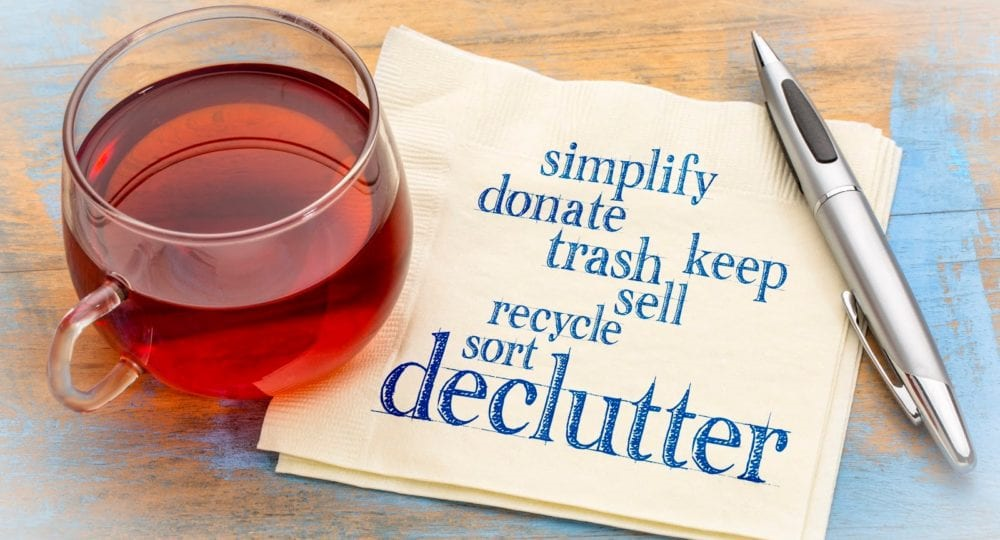
1. De-Clutter in Manageable Bits: When you look at your chaos-filled house, the idea of decluttering it seems overwhelming. So don’t. Instead, take 30 minutes a day to put one small part of your house in order -- the junk drawer, your shoe rack, your kids’ art supplies. After a week or two, you’ll start seeing a big difference in your home.

2. Save the Best From Each Child: Your child will bring home a virtual Louvre of art projects and worksheets almost every week, says Debi Silber, MS, RD, author of A Pocket Full of Mojo: 365 Proven Strategies To Create Your Ultimate Body, Mind, Image and Lifestyle. You may feel like the Grinch when you toss some of it, but the alternative is to end up a hoarder. Silber suggests tossing rote worksheets and other generic stuff right away. But save standout artwork and star projects in a file box in your kitchen or den, one file box for each child. "At the end of the school year, go through the box and decide what you really want to keep, then put it in a plastic bin in the attic or the basement with a label on it for name, age, and grade," Silber says.

3. Color Your Children's World: If you have more than one child, color code easily misplaced or disorganized things by child. For one child, a blue bath towel, lunch box, and toothbrush. Red for another. Green for another. "That way it’s easy to know what belongs to whom, and who needs to put something away," says Silber.

4. Thumbs Up, Thumbs Down on Kids Old Toys: Involve your children in choosing when it’s time to get rid of toys, sports equipment, and other stuff.
"I’d bring a trash bag into my kids’ rooms and they’d sit on the bed, and I’d hold up something and they’d give me a thumbs up or a thumbs down," says Silber. Thumbs down means it goes in the trash bag for donation (or the actual trash, if it’s in poor enough condition.) If your child’s a pack rat and clings desperately to every toy, Silber suggests this trick: every so often, pack up a box with the items you know they’ve lost interest in. Stash it in the garage or the basement for six months. "Then, tell them, ‘I’ve been cleaning out your room, and there’s a bunch of stuff in the garage. Want to take a look before I give it away?’" she says. "Most of the time they’ll say no.

5. Use the Right Organizers: You don’t have to buy out the nearest office supply store, but a few carefully chosen organizing items can help keep the clutter from overtaking your life. Silber’s go-to choice: the over-the-door shoe bag. Hang it over your child’s bedroom door or in the playroom as an easy place to stash small items like hair accessories, stickers and beads, and art supplies.
Jessica Hupf, MA, a marriage and family therapist intern in private practice in Westlake Village, Calif., recommends the tried-and-true three-ring binder. "Moms can drown in paperwork," she says. "Work, school, household bills, and so on. Get a bunch of three-ring binders and a hole punch and go through and separate it all: a binder for each child’s school papers, a binder for bills, one for home projects, and so on."

6. Change Old Patterns: Does this sound familiar? You spend an entire weekend decluttering your junk drawer or the hall closet, and then a month later, it’s even more cluttered than before? Stephanie Somanchi, PhD, an executive life coach who has worked with Nike and U.S. Bank, suggests taking some time and figuring out your daily rhythms, so you understand why a particular space keeps getting cluttered. "If your go-to behavior is to drop your keys and mail on the kitchen counter, you’ll continue that clutter pattern every time you clean it all up," she says "Figure out how to change that pattern: have a mail sorter and a set of hooks by the kitchen door, or come in a different door and go straight to your home office."

7. Ask Why Before You Accept Clutter: The final key to decluttering, Somanchi says, is asking yourself why you’re keeping some of the stuff that is crowding your floors, closets, halls, and drawers. "Is your junk drawer huge because you’re thinking about ‘What if I need this mismatched set of screws someday?’" she asks. "Or are you keeping every single thing your child ever put a crayon to because you’re afraid it makes you a bad mom to throw something away? Think about why you’re keeping something and if it really makes sense in your life."URCES:
Debi Silber, MS, RD, lifestyle coach and author, A Pocket Full of Mojo: 365 Proven Strategies to Create Your Ultimate Body, Mind, Image and Lifestyle, Suffolk County, N.Y.Jessica Hupf, MA, marriage and family therapist intern, Westlake Village, Calif.Stephanie Somanchi, PhD, executive life coach, Portland, Ore.

Reviewed by Hansa D. Bhargava, MD on February 27, 2012

“Bust Your Clutter Hotspots!”

Entry Hall Dump: It's clutter ground zero: raincoats, purses, backpacks, and gym bags.

What It May Mean: Your family is distracted and eager to move on to the next activity when they get home. So they simply drop things as they walk in the door.

Quick Foyer Fixes: Think of the foyer as a launching pad, not a dumping ground. Leave only things that are ready to go out the door.

  • Use shelves and hooks on coat closet wall space.
  • A tasteful tower of hatboxes can hold out-of-season hats, mittens, and shoes.
  • Hold onto your sports gear when you walk in the door. The "finish line" for gym clothes is the laundry room, not the foyer. Equipment can go to the garage.

Overstuffed Pantry: You can cram a lot of stuff in there -- cookie sprinkles, low-fat snack bars, industrial-sized bottles of ketchup -- even though it's probably hard to find what you need. You may even forget what's in there.

What It May Mean: You're an impulse buyer -- you like to try new things or you can't resist a bargain. Or you buy foods you want to or think you should eat, but you never eat them.

Prune the Pantry: To make your pantry work:
  • Check dates and get rid of foods that have expired.
  • Think like a grocer: Group foods by type and label the shelves. Put things that you would use together, like baking supplies, in a box or basket that you can find easily.
  • Check the pantry when you make a shopping list. Don't buy spaghetti sauce until you've used the jars you already have, even if it's on sale. Stick to your list when you shop.

Mail Mountain: You may throw it in a box, stack it in neat piles, or shove it in a drawer. No matter how your mail piles up, it's a problem if you miss bills, report cards, tax forms, or other must-haves.

What It May Mean: Snail mail clutter, like email inbox clutter, is often about putting off decisions, organizers say. You need to decide what to do with each piece, which takes time.

Clear Paper Clutter: You can sort and shred, but it's easier to cut down on mail.
  • Get your bills online.
  • You can get most other mailed items online too, like magazines, newspapers, and concert schedules.
  • Snap a cell phone photo of junk mail you want to stop. There are free apps that can cancel it for you.
What about those piles of catalogs, with pages you've marked for things you'd like to buy? Take a photo of the page instead.

Random Refrigerator Door Clutter: It's both a display case and mission control: schedules, phone lists, coupons, invitations, children's artwork, photos, souvenir magnets, and other things you want to remember. A typical door holds 52 objects that may cover 90% of its surface.

What It May Mean: You stick things on the refrigerator to remember the family's good times and must-dos. But there's so much there, you don't see anything.

Less Is More on the Door: To make things neat and visible:
  • First, take down everything. Put mementos in a bag for two weeks. If you find you can live without them, discard. 
  • Move reminders like dry cleaning tags to your car or wallet. Once a week, like when you get gas, go through them and toss out the ones you don't need.
  • Rotate magnets, photos, and artwork so you see them with a fresh eye.

Bathroom Counter Chaos: One bathroom counter might have many toothbrushes, shampoos, and skin-care products left out on it, as well as a jumble of makeup and a few stray toothpaste caps.

What It May Mean: You're a perfectionist, always searching for the best products. Or you like to try new things. Or you can't resist "gift with purchase" buys.

Change Sloppy to Serene: Try these tips:
  • How many bottles of conditioner or lipsticks in the same shade can a person use at once? Limit it to one of each item per person.
  • Give each person a shower tote or basket for his stuff. Keep them in cubbies or cabinets.
  • Arrange things that must be within easy reach on a tray to make bathroom cleaning easier.
  • Make a rule: No one opens a new shampoo or other product until she finishes the one she already has.

The Junk-Heaped Garage: It's the bonus room for our material world spillover: About 75% of U.S. garages are too full to fit a car. Yours has big-box store purchases, a refrigerator to store extra food, holiday decorations, unused fly-fishing gear, and crafting supplies.

What It May Mean: You like to stockpile food and supplies. You gear up for hobbies you end up dropping. You tell yourself that you'll sell your unwanted stuff online.

From Gnarly to Neat Garage: Garage clutter-busters:
  • Find a good home for items you won't use again. If you're not sure about something, put it in a box, tape it up, and date it. If you don't need to use it in 18 months, get rid of it.
  • Use shelves to hold bulk supplies.
  • Borrow or rent costly gear for a new hobby until you know you'll stick with it.
  • Before you buy more seasonal decorations, check to see if you have room to store them.

Beloved Junk Drawer: Everyone's got one. Some people have one in each room. Many people love their junk drawer. It's home to all kinds of random things: batteries, birthday candles, stray buttons and tacks, change from various countries, stamps, tools, take-out menus, receipts, SIM cards, stamps, flash drives, and rubber bands.

What It May Mean: You're normal.

Problem Drawer No More: There's no need to get rid of your junk drawer. But clear it out when it gets too crazy to be useful:
  • Take everything out and pile similar items together. Get rid of things like expired coupons and spare keys that you can’t identify.
  • Buy a plastic tray with dividers, or repurpose baby wipes or cigar boxes, mint tins, and mesh bags. Group similar items together. This can be a fun job for children on a rainy day.

Kid Clutter Takeover: Dolls on the sofa, board books in the bathroom, train tracks down the hall.  After your children (and their friends) play with toys, they don't put them away -- and you don't make them.

What It May Mean: You have other priorities: You value creativity and play over neatness, or doing homework over picking up. Or your kids don't pick up because you don't. Or you buy too many toys.

Tidy Up Toyland: To calm children's clutter and reclaim adult space:
  • Make some rooms "no toy" zones. Toys left in them go into a penalty box to be earned back with chores or good behavior.
  • Make a rule that your children -- and their friends -- can't start a new activity until they clean up the first one.
  • Model good behavior: Let your child see you pick up your stuff.
  • Keep it fresh: Put out one stuffed animal or one bath toy at a time. Rotate toys in and out of use.
Reviewed by David T. Derrer, MD on March 24, 2014

SOURCES:

Greater Good Science Center, University of California, Berkeley: "How to Eliminate 'Junk Stimulus.'"
Lynne Johnson, certified professional organizer; past president, National Study Group on Chronic Disorganization.
Geralin Thomas, certified professional organizer; founder, Metropolitan Organizing; past president, North Carolina Chapter National Association of Professional Organizers.
Michael A. Tompkins, PhD, psychologist, San Francisco Bay Area Center for Cognitive Therapy, Oakland, Calif.
UCLA Magazine: "The Clutter Culture."
UCLA Newsroom: "Trouble in paradise: UCLA book enumerates challenges faced by middle-class L.A. families," "Gallery: Seven Common Challenges Facing Middle-Class Families at Home."
“Clutter isn’t just in your home, attic, garage or office. Clutter is also in your mind, and distracts you from the amazing things you are meant to do” (Katrina Mayer)
“Declutter the mess in your home and heart. Don’t let your past crowd out your future.” (Dr. Thelma Bryant-Davis)
 Much Love, Dr.Shermaine #InformativeRead #PleaseShare #HealthyBodySoulAndSpirit #IWantYou2LiveWell

The Goal is to Always Make You Aware of What Concerns Your Body, Soul and Spirit, So You Can Have Open, Honest and Frequent Discussions With Your Physicians and Counselors. You Can’t Treat or Cure What You Don’t Know is Sick.

"It's Not Selfish to Love Yourself, Take Care of Yourself and to Make Your Happiness a Priority. It's a Necessity." (Mandy Hale)

"Self-Care is Not Selfish. You Cannot Serve From an Empty Vessel." (Eleanor Brown)

 The contents of the WebMD and Self-Care With Dr. Shermaine Sites, such as text, graphics, images, and other material contained on the WebMD and Self-Care With Dr. Shermaine Sites ("Content") are for informational purposes only. The Content is not intended to be a substitute for professional medical advice, diagnosis, or treatment. Always seek the advice of your physician or other qualified health provider with any questions you may have regarding a medical condition. Never disregard professional medical advice or delay in seeking it because of something you have read on the WebMD and Self-Care With Dr. Shermaine Sites!

If you think you may have a medical emergency, call your doctor or 911 immediately. WebMD and Self-Care With Dr. Shermaine does not recommend or endorse any specific tests, physicians, products, procedures, opinions, or other information that may be mentioned on the Sites. Reliance on any information provided by WebMD, WebMD employees, others appearing on the Site at the invitation of WebMD, and Self-Care With Dr. Shermaine or other visitors to the Sites is solely at your own risk.
 

Wednesday, January 8, 2020

"30 Signs You're in a Toxic Relationship"

 
Unhealthy behaviors between romantic partners, friends, or even coworkers aren't always as obvious as they seem.


RELATIONSHIP RED FLAGS: Signs of a toxic relationship are sometimes easy to spot—blatant infidelity or physical violence, for example. But there can often be more subtle signs that something's just not right between you and your partner—or between you and a close friend, a coworker, or a family member. (It's not just romantic relationships that can become toxic.) No matter what form a relationship takes, it's important to pay attention to how it really makes you feel, says Andrea Bonior, PhD, adjunct professor of psychology at Georgetown University and author of The Friendship Fix. "Keeping a finger on your own emotions can help you develop insight about the people in your life, so you can choose healthier situations," she says. To help you do just that, here are 30 signs you've entered toxic territory—and what you may be able to do about it.


YOU’RE ALWAYS WALKING ON EGGSHELLS: "One of the first signs of a toxic relationship is when one partner is very controlling," says Bonior. Controlling doesn't always mean physically threatening or violent. "It can simply be that you feel frightened to share your opinions—you're constantly walking on eggshells because you're afraid of your partner's emotional reactions."


YOU NEVER GET YOUR WAY: A controlling partner may also ignore or overrule your opinions, even when you do have the confidence to voice them. "A lot of times it's a matter of imbalance," says Bonior. "One person is always calling the shots, always making the plans—for simple stuff, like where you're going to eat dinner, and for more important issues, like where you're going to live." If you're truly okay with letting your partner make the majority of the decisions, this arrangement can be fine, she says. "But often in a toxic relationship, one partner eventually gives up because they just don't feel heard."


YOU DON’T APPRECIATE EACH OTHER: All too often, relationships go south when partners start to take each other for granted. In a 2015 University of Georgia study, married people who felt appreciated by their spouse—and were acknowledged when they did something nice—reported higher marital quality than those who didn't. "It goes to show the power of 'thank you,'" study author Allen Barton said in a press release. "Even if a couple is experiencing distress and difficulty in other areas, gratitude in the relationship can help promote positive marital outcomes."


BAD BEHAVIOR IS ENCOURAGED: It's one thing when a friend complains about dating over drinks; it's another when he or she orders round after round (even after you've politely declined) and encourages you to badmouth or betray your own partner. Sure, your pal may be going through a rough patch, but he or she should still have your best interest at heart. Your relationship with this person should come down to one question, says Kelley Quirk, PhD, a clinical research fellow at The Family Institute at Northwestern University: Do you like yourself less when you're around them? "If you are confident in your values and you're not swayed by their influence, it might not be a problem," she says. "But if that person brings something out in you and you feel yourself getting sucked into their bad behavior, that's not a healthy relationship."


YOUR PARTNER GETS PHYSICAL: You may think you know what intimate partner violence looks like, but it isn't always as obvious as it seems. "Grabbing her arm and saying 'Get back here, I'm not done talking to you,' or gripping his face and saying, 'Look at me when I talk to you,'—these behaviors don't necessarily cause physical damage, but they do represent low-level boiling-over points of conflict," says Quirk. This type of behavior may be especially overlooked when a woman does it, she adds. "For a long time, society accepted it as funny or spunky, but we wouldn't look at it the same way if the genders were reversed."


YOU’VE BROKEN A FEW PLATES: Punching a wall or throwing objects during fights should also be seen as red flags, says Quirk. Not only are these unhealthy ways of regulating emotions, but they could escalate to actions that really do cause harm. "You could have 10 years of just throwing a plate, and at year 11 you throw the plate at your partner," she says. "It's also about emotional safety: Partners should be able to express themselves without fear of what's going to happen when they do."


YOU’VE BEEN LIED TO: Little white lies aren’t always a bad thing, especially when they're told to protect someone you care about. But if you catch a friend or romantic partner in a lie, it's important to look at that person's motivations, says Quirk. "Was it to engage in some behavior they know you wouldn't be on board with or supportive of? That would be a really scary place to be, because it's a strategy they might continue to use," she says. No matter what the reason, make it clear that dishonesty won't be tolerated in your relationship, especially if you've noticed a pattern that's likely to keep repeating.


YOUR FRIENDSHIP IS TOTALLY ONE-SIDED: Maybe you're the one who always reaches out, or you always make more of an effort to actually get together. Or maybe your friend only ever wants to talk about him or herself, and never about you. "Some people just take from friendships without giving anything back," says Bonior. "If it's always about their needs and they never help meet yours, you have to ask yourself if it's really healthy for you." Cut your friend some slack if he or she is going through a hard time, but if it becomes par for the course, make your concerns heard.


EVERYTHING’S A COMPETITION: Close friends can sometimes fall into a trap of competing against each other, especially if they are in the same line of work or have similar lifestyles, says Bonior. "If you're always trying to one-up each other, it can get to the point where you become very passive aggressive—or even happy when the other person fails." Not only can this cause animosity toward your so-called friend, but it can also leave you insecure about whether your own situation is good enough. Do yourself a favor and stop comparing your life to anyone else's, says Bonior; your mental state and your friendships will be stronger for it.


YOUR PARTNER TRIES TO MAKE YOU JEALOUS: If your main squeeze feels insecure about your relationship, he or she may try to preserve it by flirting with other people in front of you. "This may have its desired effect, but it's not the most honest, constructive way to address problems in your relationship," says Quirk. It can also backfire: Instead of giving your partner more affection, you may just get angry or decide to retaliate with manipulative behaviors of your own. "Your partner should really come to you and talk openly about feeling neglected or lonely," says Quirk, "not wait for you to figure it out or get your attention in deceptive ways."


YOUR FAMILY OVERSTEPS THEIR BOUNDARIES: We can't choose our family members—but we can strive to make our bonds with them healthier, says Bonior. "Many grown adults let their parents or their siblings treat them or talk to them in ways they wouldn't tolerate from anyone else," says Bonior. "But if their behavior makes you feel belittled or guilty, that's not okay. Just because she's your mom or your sister, she does not get a free pass." Set boundaries with family members—like what topics are off limits and what your expectations are for visits with them—and don't feel guilty about enforcing them.


YOUR PAL IS STUCK IN THE PAST: Friendships that last a lifetime are very special, but they can also be challenging when people's lives go in different directions. A friend from college may still be partying hard and playing the field, for example, while you're settled down with a demanding job and a family. "This can work, as long as both parties are willing to compromise and acknowledge that things have to adjust," says Bonior. (Maybe you get together for Sunday brunch instead of Saturday night barhopping, for example.) The problem comes when one person is unwilling to accept that change: "If a friend gets mad that you can't hang out at bars anymore or wants nothing to do with your kids or your new life, you may have to do a cost-benefits analysis and decide whether he or she is worth still spending time with."


YOU’RE ALWAYS GETTING PHUBBED: If your partner or friend's smartphone feels like the third-wheel in your relationship, he or she may be due for an intervention. In a 2015 Baylor University study, more than 46% of survey respondents said they'd been phone snubbed—or "phubbed"—by their romantic partner, and nearly 23% said the action triggered conflict with that person. The constant distraction of social media is often to blame, say the researchers. In another study from 2014, using Twitter frequently also led to relationship problems. Sometimes, people may not even realize they're phubbing their partners, but if you've brought it up and your significant other refuses to change, that may tell you where his or her priorities lie.


ALL YOU DO IS GOSSIP: You may have a great time with that friend at work who tells it like it is and always makes you laugh, but if that fun is had at the expense of others, you might want to reexamine your relationship. "People who are constantly wallowing in gossip and complaining about other people can really bring down your mood after a while," says Bonior. "Plus, there's the chance they're talking about you behind your back, too." It's true that gossip can help people form bonds in the workplace, but it can also pit them against each other and make for a very unpleasant environment. Try to steer things in a positive direction, and aim to make your friendship less exclusive and more inclusive.


HANGING OUT FEELS LIKE A CHORE: If you approach your monthly dinner date with a friend as something you have to check off your to-do list and not something you actually enjoy, that's a sign something needs to change. Maybe you feel drained by her constant negativity, or you know you'll be frustrated when he shows up late, again. "We find it hard to end friendships that aren't working anymore, but meanwhile they're eating away at our mental health," says Bonior. "You have to take a step back and ask yourself what you really deserve." Try talking with your pal about what's bothering you; if that doesn't work, consider letting this friendship lapse.


YOUR FLIGHT-OR-FIGHT RESPONSE KICKS IN: Then there are those relationships that don't just feel like a chore; they actually trigger a full-on sense of dread. "It could be seeing your boss's name pop up in your inbox or seeing a text from a friend, before you even read what it says," says Bonior. Your heart skips, your stomach drops—"it's like you've been traumatized; your whole body goes into fight or flight mode." In fact, there's even an app designed to measure these subconscious reactions and identify the most poisonous people in your life.


YOU’RE SUDDENLY MOODY AND INSECURE: Sometimes it's not your partner's actions that signal a toxic relationship; it's your own. If you suddenly feel paranoid and unable to trust your significant other, ask yourself why, says Bonior. "Are you getting more anxious because of something that has to do with you? Maybe you're in a bad place and are worried about other things, and it's spilling over into your romantic life. Or is there something about your relationship that's just not right? Maybe deep down something isn't adding up, and your gut is trying to tell you something." Open up to your partner and share your insecurities; if he or she gets defensive about your questions, that's another red flag.


YOUR PARTNER TEASES YOU ALL THE TIME: Constant criticism about your appearance, your intelligence, or your personality is more than just innocent teasing, says Bonior. "Some people will defend their partner, and say "It's all in good fun, that's just how we treat each other.' But if they're making fun of you over and over again, you're not going to feel valued or accepted for who you really are." In fact, criticism and contempt—including sarcasm, ridicule, name-calling, and body language like sneering and eye-rolling—are two of relationship scientist John Gottman's famous "Four Horsemen of the Apocalypse," or signs of a failing relationship.


YOUR BOSS USES EMOTIONAL BLACKMAIL: Not everyone likes their boss, and it's normal for supervisors to be hard on their employees. But some head honchos are worse than others—and if you have a truly toxic relationship with your higher-up, your work (and even your health) can suffer. "When your boss uses a lot of emotional manipulation, like guilt trips, threats of embarrassing you, or pitting you against your coworkers, those are signs that he or she is not playing by the rules of a typical workplace," says Bonior. Standing up for yourself against a hostile boss may help you feel better, suggests one study, although your best bet is to find a job where everyone gets along.


YOU FEEL ISOLATED FROM OTHER FRIENDS: An emotionally abusive partner doesn't always use anger to exert control, Bonior says. "Sometimes they use guilt or shame to make you feel like you've hurt them. They might say, 'If you go out with your friends tonight I'll be so lonely,' or 'I can't believe you did that without me.'" When you start dating someone new, it's normal to see your friends less often. "But if you feel isolated from other people, that's definitely a very troubling sign," says Bonior.


YOUR FRIENDS TELL YOU SOMETHING’S WRONG: You may not realize you're in a toxic relationship until things get really bad, especially if your situation has slowly gotten worse over time, or has gone on for so long it seems normal. That's why it's important to listen to other friends who voice their concerns. "You need to take those objections seriously, especially when you respect those people's opinions and they don't have ulterior motives," says Bonior. "Sometimes you need an outsider's perspective to realize how dysfunctional something really is."


YOUR FIGHTS DON’T GET RESOLVED: Fighting can be healthy as long as both partners truly feel better afterward. Arguments only become toxic when situations don’t get resolved, says Quirk. "People hold grudges when they feel like their partner doesn't understand why they're upset, or they feel that things wouldn't be any different even if their partner did understand," she says. "In order to feel like equals, each partner needs the reassurance that, yes, their voice is heard, and yes, things will be different next time."


YOU DON’T TALK ABOUT THE SERIOUS STUFF: "A lot of times, it's the stuff that goes unsaid that kills a relationship, not the stuff you argue passionately about," says Bonior. A person's reasons for not bringing up a big issue could vary; maybe they're scared of how their partner will react, they've tried talking about it before with little success, or they don't value their partner's opinion. If you find yourself withdrawing or avoiding a serious topic, ask yourself why that is—and what you can both do to make the conversation easier.


JEALOUSY GETS THE WORST OF YOU: Jealousy is a hard emotion to escape, and there's certainly nothing wrong with feeling envious of a friend's good fortune. But in some situations, those feelings can become overwhelming. "Say your best friend just got pregnant after only two months of trying and you've been struggling with infertility for three years," says Bonior. "If you're feeling really bad about that, the best thing for you may be to get some space from that person for a little while." That doesn't make you a bad friend, she adds; in fact, taking care of yourself may be the thing that keeps your friendship intact in the long run.


YOU’RE ALWAYS PICKING UP SLACK: Beware this common workplace trap: "We form bonds with our coworkers because there's this mentality of 'We're all in this together,'" says Bonior. "But often there's an imbalance of power between work friends—one starts slacking off or using the other as a scapegoat—and you may not realize it because it happens so gradually." You may pride yourself on going the extra mile to help friends in need, but be sure you're not being treated unfairly or taken advantage of intentionally.


ONE OF YOU LOST WEIGHT: When one person in a romantic relationship sheds unwanted pounds, the dynamic between partners can change. Of course, this can be a good thing, especially if the change encourages both partners to be healthier, or rekindles romantic attraction. But sometimes, weight loss can have negative effects on relationships. In a 2013 North Carolina State University study, researchers noted that some partners felt jealous or threatened when their significant other lost weight, or nagged by a suddenly healthy partner who wanted them to follow suit. To keep this situation from turning toxic, researchers say, open communication is key. "Talk about it before and keep talking about it," says Charlotte Markey, an associate professor of psychology at Rutgers University who reviewed the study's findings.


YOU CAN’T REMEMBER THE LAST TIME YOU TOUCHED: Kissing, hugging, and skin-to-skin contact release bonding hormones and feel-good endorphins, so if you're not being affectionate on a regular basis, you're missing out an important part of a healthy romantic relationship. In a 2011 Kinsey Institute study, men and women who reported frequent kissing were more sexually satisfied, and men were happier with their relationships overall. Even your sleeping situation may be a red flag that something isn't right: In a 2001 British study, the farther apart couples slept, the less likely they were to be happy with their relationships.


YOU GET (OR GIVE) THE COLD SHOULDER: If you or your partner regularly avoids conversation or withholds affection or sex whenever things don't go your way, your relationship could be headed for a downward spiral. In a 2010 study from Brigham Young University, researchers found that 96% of wives and 88% of husbands were guilty of this type of “love withdrawal” at some point during their marriages. Occasional use of these tactics probably won't tank a relationship, the study authors concluded, but they predict that as couples use them more frequently, their risk for divorce goes up.


YOUR PERSONALITIES CLASH: "There are toxic people and there are toxic interactions," says Quirk. "And sometimes you can have a relationship where both parties are good people, but for whatever reason you bring out the worst in each other." It could be that you're anxious for a commitment and your partner doesn't want to feel pinned down. Or maybe you're hungry for attention and your partner isn't the type to dole out PDAs. "If you're not getting the cues or reinforcements that you expect, it can be disastrous, even though your partner isn't technically doing anything wrong," Quirk continues. Attending couples counseling may help you rework some of those patterns, she says, or it may help you decide when it's best to let go.


YOU CAN’T BE YOURSELF: Many of these red flags follow a common theme: If you can't be yourself around a person, you might want to reconsider spending time with them. "Often relationships become toxic because you're scared to show parts of yourself that might not be well received," says Bonior. "If you feel like you have to wear a mask, always be 'on,' or say things that don't come naturally, that can be a very stressful and unhealthy situation." The bottom line, she says: Always ask yourself, "Does this person make me feel like my best self?" Then, strive to surround yourself with people who do.

Amanda MacMillan, Health Magazine

“Escaping a toxic relationship can feel like breaking a piece of your heart off; like a wolf chews its leg off to escape a steel trap. Leaving is never easy, but sometimes it’s necessary to save yourself and others from dying inside.” (Bryant McGill)

“Don’t ask why people keep hurting you. Ask yourself why you keep allowing it to happen.” (Robert Tew)

“I was your cure, but you were my disease. I was saving you, but you were killing me.” (Author Unknown)

“Toxic relationships not only make us unhappy; they corrupt our attitudes and dispositions in ways that undermine healthier relationships and prevent us from realizing how much better things can be.” (Michael Josephson)

“You have to learn to get up from the table when love is no longer being served.” (Nina Simone)
 
Much Love, Dr.Shermaine, #InformativeRead #PleaseShare #HealthyBodySoulAndSpirit #IWantYou2LiveWell
The Goal is to Always Make You Aware of What Concerns Your Body, Soul and Spirit, So You Can Have Open, Honest and Frequent Discussions With Your Physicians and Counselors. You Can’t Treat or Cure What You Don’t Know is Sick.
 
"It's Not Selfish to Love Yourself, Take Care of Yourself and to Make Your Happiness a Priority. It's a Necessity." (Mandy Hale)
"Self-Care is Not Selfish. You Cannot Serve From an Empty Vessel." (Eleanor Brown)

The contents of the Health Magazine and Self-Care With Dr. Shermaine Sites, such as text, graphics, images, and other material contained on the Health Magazine and Self-Care With Dr. Shermaine Sites ("Content") are for informational purposes only. The Content is not intended to be a substitute for professional medical advice, diagnosis, or treatment. Always seek the advice of your physician or other qualified health provider with any questions you may have regarding a medical condition. Never disregard professional medical advice or delay in seeking it because of something you have read on the Health Magazine and Self-Care With Dr. Shermaine Sites!

If you think you may have a medical emergency, call your doctor or 911 immediately. Health Magazine and Self-Care With Dr. Shermaine does not recommend or endorse any specific tests, physicians, products, procedures, opinions, or other information that may be mentioned on the Sites. Reliance on any information provided by Health Magazine, Health Magazine employees, others appearing on the Site at the invitation of Health Magazine, and Self-Care With Dr. Shermaine or other visitors to the Sites is solely at your own risk. 
 

"13 Ways to Use Apple Cider Vinegar That Will Change Your Life!"

    Of all the well-touted natural health remedies that exist today, very few are followed quite as religiously as taking a tablespoon or tw...